

After 55 long years, why does Bangladesh continue to grapple with the significance of its Independence Day for the Razakars?
Dr. Pamelia Riviere
দাম দিয়ে কিনেছি বাংলা কারো দানে পাওয়া নয়
দাম দিছি প্রাণ লক্ষকোটি জানা আছে জগৎময়।
Over the past two years, Bangladesh has been unable to celebrate significant national events such as Victory Day, Intellectual Day, and Independence Day due to internal politics within the interim government. This situation has led to uncertainty among the citizens regarding the current state and future direction of politics in Bangladesh. Many people are feeling pressured to understand the implications of these political dynamics and what they mean for the country moving forward.
This song দাম দিয়ে কিনেছি বাংলা কারো দানে পাওয়া নয় about Bangladesh reflects the historical struggles of the Bengali people. Initially part of British India, the region of East Bengal eventually became known as East Pakistan after the partition in 1947. The quest for independence led to a brutal liberation war in 1971, during which a significant loss of life occurred. Today, Bangladesh continues to grapple with challenges, including the rise of fascism and the influence of extremist groups. .jfif)
These failures culminated in the downfall of the former Prime Minister, who faced immense pressure from fundamentalist factions, a situation that some believe was influenced by broader geopolitical interests.
This patriotic song vividly encapsulates the unwavering spirit of Bangladesh in the lead-up to its independence in 1971: "I purchased Bengal at a price, not merely a gift from anyone's hand. I invested my very essence, my life, worth millions—a truth the world recognizes. When you see your brother in 1757, remember the echoes of history that resonate in your mind.
I paid that price upon the hallowed fields of Plassey, as history stands as witness to my sacrifice. In those times, the world awakened to our wealth, where millions of lives were deemed trivial to extinguish. If we are to revisit those memories, let us speak of them a century later.
The British have departed, yet the burden of our past remains heavy, entrusted to those who walk the path of executioners. They have silenced me under various pretexts, each more brutal than the last. Countless young souls laughed, yet they fell under the weight of gunfire and the harshness of the gallows.
Still, my sorrowful Bengal, together we endure this pain, for we are not alone in our struggle. For ninety-two years, I have defended the language that speaks to the heart, a testament to my suffering. The blessed have shed their blood, leaving the world astonished at the depths of our sacrifice.
I have bled since the dawn of time—oceans, rivers, and tributaries stained crimson with the price of our freedom. This is no myth; I made Bengal blush with blood on the fateful night of March 25, 1971. The working class cries out to me, beckoning from the West, while I lie bare before my ancestors; in this struggle for honour, can we truly call it theft?
The Padma, Meghna, and Yamuna rivers of Bengal overflow with our collective sorrow.
I have borne the weight of my mother’s tears and my sister’s honour, paying the ultimate price. Can anyone among you claim that my sacrifice is worth any less than another’s? How many brave warriors, Birangana women, have emerged from the lineage of characterless/ Kulangana ? Today, the sky and air over Bengal mourn her suffering, weighed down by grief.
I have paid dearly, while many esteemed intellectuals are called forth from the depths of my heritage. Will the wound etched in my chest find solace in this lifetime? On the morning of December 16, 1971, this heartbroken Bengali mother finally embraced her true son."
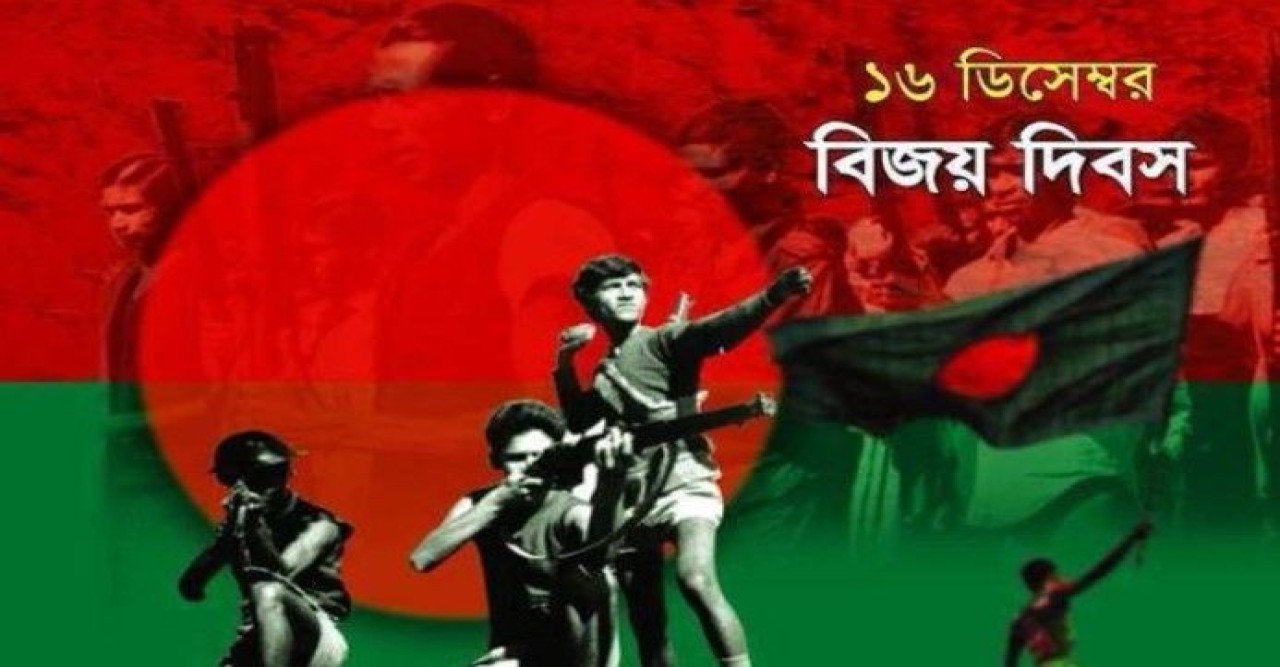
Today marks the 16th of December, a day etched in the heart of every Bangladeshi as Victory Day—the day that ushered in freedom and independence. On this momentous day, Bangladesh emerged triumphant from the shadow of oppression, liberated from the clutches of the collaborators—the Razakar, Al Badr, and Al Shams—alongside the brutal forces of the Pakistani Army. The air was thick with a sense of freedom and jubilation as the nation's spirit soared, signalling the end of a dark chapter in its history.
Yet amid the occasion that should be filled with pride and joy, many Bangladeshis find themselves grappling with an unsettling turmoil today.
The atmosphere is heavy with an underlying fear, casting a shadow over celebrations that should resonate across the nation. What obstacles has the current interim government placed in the way of honouring this momentous day?
Bangladeshi political analysts must scrutinize these challenges and seek solutions that allow patriotic politicians to reclaim the spirit of celebration.
After 55 long years, why does Bangladesh still struggle to observe its Independence Day, Martyrs’ Day, or Victory Day with the grandeur and joy such significant occasions deserve? The nation seems bound by apprehensions stemming from the presence of fundamentalist elements and individuals whose love for the country pales in comparison to their material concerns.
Are we, once again, faced with the grim question of whether more sacrifice is necessary to liberate Bangladesh from these ominous forces and nefarious influences? The struggle for a truly free and safe Bangladesh remains a poignant call for reflection and action.
The writer works as a freelance analyst.

.jpg)
.jpg)

.jpg)