
The Architecture of Synergy: Bridging Cultures of Science, Liberal Arts, and Human Purpose in the AI Era
The Architecture of Synergy: Bridging Cultures of Science, Liberal Arts, and Human Purpose in the AI Era
(Occasion: Inaugural Keynote Address; Event: Multidisciplinary Biennial International Conference on Bridging Cultures; Organizer: City University, IDEAS journal, and IBC Foundation, Location: World Literary Center, Dhaka, Bangladesh; Date: November 26, 2026)
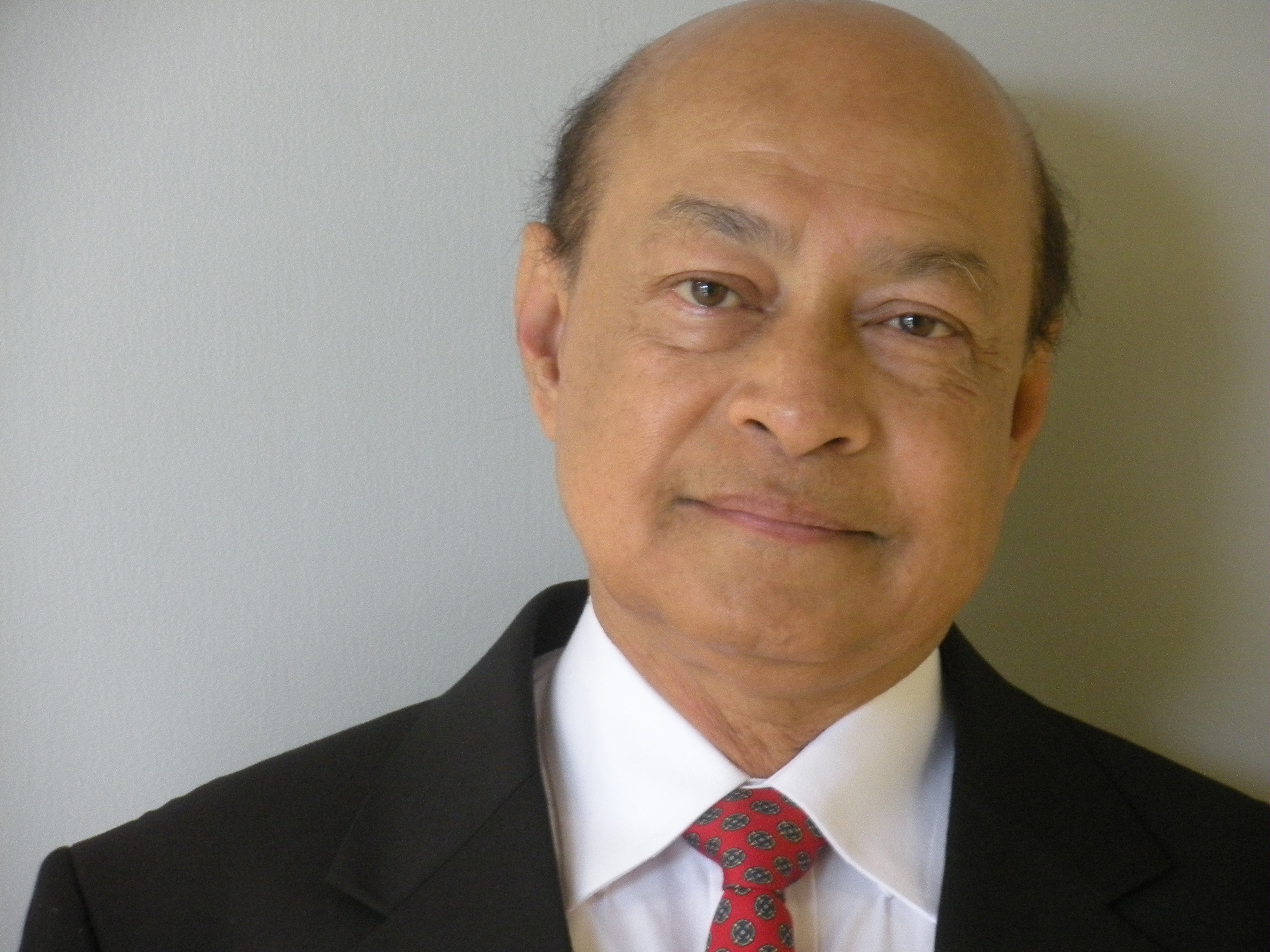
Speaker: Professor Emeritus and former Vice Chancellor Dr. Mostofa Sarwar
I. Introduction: Welcome to the Cultural Crossroads
Distinguished scholars, esteemed dignitaries, colleagues, cultural ambassadors, and friends—good morning and a warm welcome to Dhaka.
It is a profound honor to stand before you today as the Inaugurator of the International Conference on Bridging Cultures. We gather in a city that sits at the confluence of ancient rivers, rich literary heritage, and a vibrant, forward-looking modern spirit. Dhaka has always been a place defined by its commitment to bridging cultures, linking traditions with transformation.
When we gather under the banner of bridging cultures, our minds naturally envision geographical bridges—connecting East and West, North and South, or linking traditions across borders. But today, we stand at a historical juncture where another, equally critical bridge must be constructed: we must focus on bridging cultures of technology and humanity, of computational power and human consciousness, and of the hard sciences and the liberal arts.
In my career as a geophysicist, I spent decades studying the invisible, tectonic forces that shape the physical Earth. Later, as an academic leader, Provost, and Vice-Chancellor, my vantage point shifted toward the tectonic shifts reshaping human society and higher education. Today, as we step into the Artificial Intelligence era, we are witnessing a global upheaval more rapid and profound than any physical shift.
The central challenge before us in Dhaka today is not simply how to adapt to AI, but how bridging cultures across disciplines can ensure that humanity remains the architect—and the soul—of this new world.
II. AI in Academia: Beyond the Human Database
Let us first examine the transformation occurring within academia.
For centuries, higher education operated on a predictable, linear formula: select a specialized discipline, absorb a discrete body of knowledge, master a specific set of technical skills, and transition into a lifelong career track.
Today, that classical formula is obsolete.
Algorithms can now write clean code, analyze complex legal contracts, generate literature, compose music, and process petabytes of scientific data in seconds. If our educational paradigm treats students merely as "human databases" designed to memorize facts for examinations, we are training them to compete with an entity that holds the entirety of recorded human knowledge at its fingertips. You cannot out-memorize an algorithm.
In academia, AI forces us to shift from a model of knowledge retention to one of interdisciplinary synthesis. The role of the university is no longer just to convey specialized information, but to commit to bridging cultures by cultivating high-level strategy, ethical reasoning, contextual adaptability, and deep creative insight.
Your degree is no longer the final seal on your education; it is simply proof that you have learned how to learn in a non-linear world.
III. The Symbiotic Synergy: Nuts, Bolts, and Human Souls
This brings us to the core philosophical challenge of our industrial and technological age.
If we fail at bridging cultures across fields, society risks fashioning itself into a giant, mechanistic industrial complex. In such a system, human beings become mere nuts and bolts—highly specialized, possessing precision knowledge of mathematics or specific engineering domains, but entirely detached from broader human meaning.
A machine comprised only of functional parts can execute tasks, but it cannot care, it cannot dream, and it cannot moralize. Nuts and bolts must have souls.
Where does that soul come from? It is breathed into society through the liberal arts—through poetry, philosophy, history, ethics, literature, and the arts. The liberal arts remind us why we build, why we innovate, and what makes life worth living.
Conversely, the liberal arts cannot remain isolated in an ivory tower, fearful of quantitative methods. To analyze society, culture, and human behavior today, the liberal arts deeply require the tools of mathematics, data science, and computational logic.
By bridging cultures of empirical science and humanistic scholarship, we create a symbiotic relationship of true synergy.
In business and mathematics, we often say that synergy creates a reality where 2 + 2 equals far more than 4. When hard science and the liberal arts unite, their combined impact transcends their individual parts:
Science without Liberal Arts gives us powerful technologies without an ethical compass or human alignment—creating efficiency without empathy.
Liberal Arts without Science gives us profound insights into human nature that lack the analytical and technological mechanisms to scale solutions for global challenges.
When we succeed in bridging cultures, science provides the empirical skeleton, while the liberal arts provide the beating heart and soul.
IV. Geophysics, AI, and Poetry: A Personal Synthesis
Allow me to ground this concept of bridging cultures in a personal context.
Throughout my life, I have walked across two seemingly disparate worlds: the rigorous, quantitative world of geophysics and scientific research, and the reflective, imaginative world of poetry and literature.
To a casual observer, geophysics and poetry might appear to be polar opposites. One deals with seismic wave equations, sub-surface velocity models, and fluid mechanics; the other deals with metaphors, existential imagery, human sorrow, and beauty.
Yet, in my experience, bridging cultures of geophysics and poetry reveals that they are twin expressions of the exact same human desire: the search for hidden truth.
A geophysicist looks at seismic signals—noisy, complex, and unreadable to the untrained eye—and attempts to reconstruct the unseen layers of the Earth beneath the surface.
A poet looks at the noisy, complex emotional terrain of human experience and uses language to illuminate the unseen truths beneath our daily existence.
Now, enter Artificial Intelligence. AI can process seismic datasets faster than any human, identifying subtle structural traps in geological formations. AI can also analyze thousands of poems, identifying meter, rhyme schemes, and stylistic patterns in milliseconds.
But AI does not feel the weight of the Earth's history, nor does it feel the existential ache of a line of poetry.
When I write poetry or analyze literary aesthetics, I am drawing on analytical precision alongside human emotional depth. By bridging cultures between human intuition and machine efficiency, I do not see AI as a competitor, but as an intellectual and creative exoskeleton. AI can assist us in modeling geophysical phenomena or synthesizing complex poetic structures, but it requires the human mind to grant those structures meaning, intention, and ethical resonance.
V. Literature, Science & AI: The Global Imperative
As delegates gathered here from across the globe for this conference, we must ask: How do Literature, Science, and AI intersect to form the foundation for bridging cultures worldwide?
Culture is the shared narrative of humanity. Literature is how we record and transmit that narrative across generations. Science is how we understand the empirical framework of our shared universe. And AI is now the global connective tissue capable of translating, analyzing, and synthesizing these narratives at unprecedented speeds.
Consider the possibilities when we prioritize bridging cultures:
Cultural Translation & Preservation: AI can assist us in translating obscure, ancient regional literatures into global languages, preserving dying dialects, and making the literary treasures of Bengal accessible to a global audience overnight.
Interdisciplinary Problem Solving: The grand challenges of our era—climate change, global health crises, ethical technology governance—cannot be solved by technology alone. They require renewable energy engineering combined with cultural narrative changes; data science paired with deep social empathy.
A New Renaissance: By automating routine cognitive work, AI frees humanity from the mundane. It challenges us to elevate our art, our literature, and our ethical standards. It pushes us to stop being mere operators of routine tasks and to become true creators, ethicists, and ambassadors dedicated to bridging cultures.
VI. Conclusion: A Call to the Future
Distinguished guests, as we inaugurate this conference today in Dhaka, let us commit to a bold vision of the future.
To our educators and academic leaders: Let us dismantle the rigid silos that separate our faculties. Let us dedicate ourselves to bridging cultures within our universities, encouraging the student of computer science to read world literature, and the student of philosophy to understand algorithms. That interdisciplinary fusion creates the exact profile the world so desperately needs—individuals who understand both how the machine works and why humanity needs it.
To the researchers, artists, and delegates: View this digital age not with anxiety, but as a vast canvas. Artificial Intelligence will provide us with unimaginable tools, but the brush, the purpose, and the human vision remain firmly in our hands.
Let us lead the way in bridging cultures—between nations, between societies, and between the hard sciences and the liberal arts. Let us ensure that as our algorithms grow smarter, our humanity grows deeper, our art grows bolder, and our global culture grows more unified.
Thank you, and I wish you all an inspiring, transformative, and productive conference.
Thank you very much.
Dr. Mostofa Sarwar, Professor Emeritus, is an internationally recognized Bangladeshi American scientist, academic, and poet whose distinguished career bridges scientific scholarship, higher education, and the literary and cultural traditions of Bangladesh and the wider world. He has served as Director of the University Honors Program, Associate Provost, and Vice Chancellor & Provost at leading American institutions and has contributed extensively to the fields of geophysics, higher education, and creative writing.