

Genocide Enterprise of Israel: Choose Starvation or Die at the Food Centre at the Hands of a Violent State of Israel
IPAC Lobby is waning. The State of Palestine is a country situated in West Asia. The country is recognized by 147 of the UN's 193 member states.
Dr. Pamelia Riviere
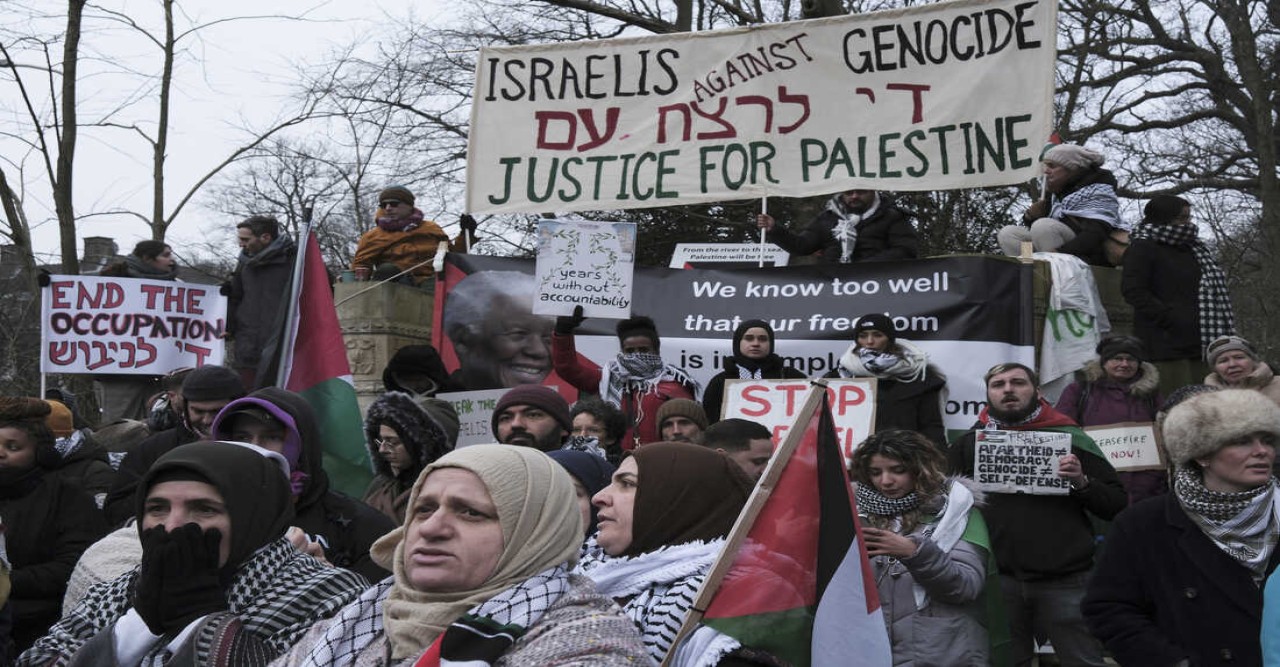
This is 2025. It is imperative that Israel makes way for Palestine! Palestine was nestled in the vibrant heart of West Asia. Once, the State of Palestine boasted a rich and profound history and culture, but now it lies in ruins. Despite the challenges it faces, Palestine stands resilient, having gained recognition from 147 out of 193 UN member states. Over the past 77 years, it has become a powerful symbol of hope and aspiration on the global stage. Since 1920, Israel has maintained a prolonged occupation of Palestine, forcibly displacing approximately 750,000 Palestinians during the cataclysmic events of 1948. This displacement marked the beginning of decades of hardship, as Palestinians have endured unrelenting suffering under what many view as an apartheid regime.
Following the events of October 7, Israel's campaign has resulted in the tragic loss of over 100,000 lives in Gaza, with an alarming number of tonnes of bombs unleashed upon the besieged population.
.jpg) Femicide-Genocide in Gaza: It appears that Trump is focused on the Epstein scandal. He has neglected issues related to Gaza, Ukraine, or Iran. Israel views this as an opportunity to increase airstrikes and shooting Palestinians at the food centre. Israel is blocking Palestinians from accessing food by using a food centre as a trap. The blockade of essential food supplies has escalated into a humanitarian crisis that some are calling a Femi-genocide. In Gaza, the spectre of hunger looms large.
Femicide-Genocide in Gaza: It appears that Trump is focused on the Epstein scandal. He has neglected issues related to Gaza, Ukraine, or Iran. Israel views this as an opportunity to increase airstrikes and shooting Palestinians at the food centre. Israel is blocking Palestinians from accessing food by using a food centre as a trap. The blockade of essential food supplies has escalated into a humanitarian crisis that some are calling a Femi-genocide. In Gaza, the spectre of hunger looms large.
Those who have managed to survive Israel's merciless onslaught now find themselves teetering on the brink of starvation. Desperate families line up for scant food provisions, only to be met with violence, as Israeli and US contractors oversee the chaos. Is Israel, through its systematic actions, enacting a strategy of genocide by starvation? Imagine a single food centre remaining open, a collaboration between Israel and the US, offering watery lentil soup that is unsuitable for toddlers and some adults to digest. Meanwhile, UNRWA operated 400 food distribution centres in Gaza. Israel banned UNRWA, all humanitarian agencies, and journalists in Gaza. As a result, the world has not known what has been happening in Gaza for the past few months.
Israel has also blocked baby formulas, causing children to die each day. UN Special Rapporteur Reem described starvation (IPC Phase 5) as a deliberate weapon, with 67 children already dead from hunger. She condemned the international community's failure to act despite overwhelming evidence, noting that the violence exceeds existing legal frameworks. Al Jazeera reported on Gaza's food scarcity. Starvation or bullets. That’s the grim choice facing many in Gaza today. Since late May, the Gaza Humanitarian Foundation (GHF) has led aid distribution, operating just four centres, compared with the UN’s former network of more than 400. At least 900 Palestinians have been killed in attacks at these GHF sites. Critics say GHF is nothing but a front for genocide, offering a deadly illusion of help. As Gaza’s people scrape for food, they face an impossible question: Risk the “death trap” for a few sacks of flour, or watch loved ones starve?
Starvation has been deliberately crafted to eliminate Palestinians in Gaza:
As the day went on, the UN announced that Israel had killed more Palestinians who were attempting to obtain food at distribution points, raising the total number of deaths since May to over 1,000. "Hunger is taking a greater toll on us than any disease could," explains a cancer nurse in Gaza, Caroline Hawley, diplomatic correspondent for the BBC. She adds, "Hunger is taking a greater toll on us than any disease could. For the first time ever, I feel completely powerless. I cannot provide even a morsel of bread for my children, nor the assistance my patients require." She mentions that she leaves her four children in tears in their tent as she sets off for her job at the Nasser hospital in southern Gaza.
"We, the medical staff, are succumbing to fatigue and hunger. We toil for endless hours without even a single meal. Many of us have fainted, but our duties prevent us from leaving. We cannot turn our back on our patients, even as our own bodies begin to fail us."
Residents of Gaza have been sharing their difficulties in obtaining food and other necessary supplies, while the UN criticizes the aid distribution system supported by Israel. "I can’t endure this any longer," one teenager tells the BBC, and a mother expresses that she has no food for her kids. According to Gaza's Hamas-run health ministry, around 33 individuals, including 12 children, have recently died from malnutrition. Gaza's "last lifelines" are disintegrating, with humanitarian conditions deteriorating at an "accelerating" rate amidst Israel's military actions, states the UN chief.
The UN's Human Rights Office reports that over 1,000 people have died while seeking food since the new aid strategy implemented by Israel began on May 27. The outrage over Israel's method of distributing aid to Gazans has intensified, with more and more Palestinians recounting their unprecedented hunger. Israel is not permitting the BBC and other international media to enter Gaza for unrestricted reporting, according to the BBC.
Israel is killing food seekers at the food aid centre mercilessly. It is shameful to see the US, Israel, Arabs, and the West supporting genocide in Gaza through finance, technologies, arms, and trade. Children in Gaza are dying from starvation as Israel has blocked food for three months, leaving only one food centre instead of 400. Famine is looming in Gaza. Palestinians have chosen to starve rather than be killed by Israeli violent gangs at the food aid centre. Almost 900 desperate and hungry Gazans have been killed in recent weeks trying to fetch food. Israel halts Gaza aid deliveries as UN appeals to Israel. Israel ordered a near-total halt to food and humanitarian aid deliveries to over two million Gazans facing a territory-wide threat of famine on Thursday.
Gaza Soup Kitchen Chef Mahmoud Almadhoun was killed by Israel a few months ago. The UN staff are now fainting from hunger and exhaustion. Since the beginning of the war, nearly 200 humanitarian workers have been killed, including five MSF staff. Seven World Central Kitchen workers died in Gaza. One thousand starving people have been reported killed brutally at the food aid centre since the end of May 2025. Two months after Israel blocked all aid to Gaza, U.S. and Israeli officials considered a new food distribution plan that has become a death zone, as Israel is trapping and starving people who are coming to the food centre and shooting at their heads and chests directly. The so-called death tarp, the Gaza Humanitarian Foundation, set up by Israel, was unprepared for thousands of hungry Palestinians, leading staff to abandon their posts.
In a deeply revealing interview with Al Jazeera, UN special rapporteur Reem Alsalem shed light on what she termed Israel's alarming "femicide-genocide" in Gaza. She presented compelling evidence indicating the systematic targeting of Palestinian women and girls, a strategy intended to disrupt the very fabric of reproductive continuity within their communities. Alsalem highlighted the staggering statistic that 67% of Gaza's approximately 60,000 fatalities are female. Among the victims are an estimated 150,000 pregnant women who have been denied crucial healthcare, alongside 17,000 others grappling with severe malnutrition.
Alsalem drew chilling parallels between Israel's blockade of essential baby formula and historical siege tactics used during Nazi Germany, citing harrowing figures such as 2,600 miscarriages and the tragic births of newborns suffering from deformities directly linked to the ongoing conflict. She staunchly rejected attempts to downplay these tragedies as mere collateral damage, pointing out that the International Court of Justice has acknowledged the possibility of genocide in this context. Her report illuminated the devastating implications of Israel's actions on families, describing them as the cornerstone of society, with erasure of civil registries leading to "wounded children with no surviving relatives." She characterized the dire situation of starvation, classified as IPC Phase 5, as a calculated weapon of war, emphasizing that 67 children have already succumbed to hunger-related causes.
Throughout the interview, Alsalem lamented the international community's alarming inertia in the face of overwhelming evidence, arguing that the extent of the violence far surpasses existing legal frameworks designed to protect human rights. As the conversation drew to a close, she issued a poignant warning about the generational trauma stemming from what she depicted as a meticulously orchestrated campaign of extermination against an entire population.
American Jewish IPAC Lobby is sinking due to the genocide in Gaza: The influence of the Israel lobby over politics, media, and foreign policy, particularly in the United States, has long been recognized. However, there are signs that this influence may be waning. Public sentiment appears to be shifting as a new wave of activism emerges, particularly among students across the world. The rise of social media has disrupted traditional narratives, and the global power dynamic is transforming. Resistance against uncritical support for Israel is evident in various arenas, from Congress to college campuses and even at the United Nations. There is a noticeable erosion of bipartisan support for Israel, alongside a cultural pushback that is being fueled by digital activism.
The narratives of Palestinians are gaining visibility and traction, highlighting calls for truth, justice, and accountability. Recent events have drawn attention to the consequences of unwavering support for Israel, especially as reports indicate the tragic loss of lives among journalists, medical professionals, and UN staff who were providing humanitarian aid in Gaza.
This situation has prompted discussions about potential boycotts of Israel, as its actions in the region come under increasing scrutiny. The ongoing Gaza conflict is contributing to a shift in Israel’s economic and diplomatic standing, with stakeholders reconsidering their relationships with the country.
The global landscape is moving from a unipolar to a multipolar system, with countries like China, Malaysia, Turkey, and others challenging the traditional dominance of the US and the Israel lobby. There is a growing consensus that the disregard for humanitarian laws cannot persist unchallenged.
Twenty-eight countries have called for a ceasefire. Is it a sincere appeal? The UK and 24 other nations have decried the "horrifying" killings of hundreds of Gazans attempting to access food from Israel's aid efforts. Countries have accused Israel of 'drip feeding' relief to civilians in Gaza, as reported by BBC News. "The suffering of civilians in Gaza has reached unprecedented levels," a joint statement said, urging an end to the conflict in Gaza and the release of Israeli captives. Israel has dismissed this as "out of touch with reality."
On early Monday, Israeli tanks initiated their first ground assault on Deir al-Balah in central Gaza. The day started with David Lammy expressing to the BBC that he was "sickened" by the scenes unfolding in Gaza, a day after the UK joined more than two dozen countries in calling for an end to the war.
As the world becomes more interconnected, individuals are increasingly able to access information and imagery related to the conflict, facilitating a wider dialogue about Israel and Palestine. Politicians, educators, artists, writers, and journalists are collaborating to critically assess the legitimacy of Israel’s actions in the context of its historical claims. The discourse suggests that accountability for the region's complexities must become a priority, as the pursuit of justice for Palestinians also serves to foster a more peaceful future for Israel. These developments indicate that there is a rising call for both Palestinian rights and a path toward coexistence in the Middle East. Israel must confront the consequences of its actions carried out in the name of faith, claiming Palestine as a supposed promised land. Now is the time to liberate Palestinians, end starvation used as a weapon, stop killing innocent Palestinians, and in doing so, ensure a brighter future for Israel itself.
Dr Pamelia Riviere is a freelance writer and analyst.
.jpeg)