

Urdu: The Official Language of Pakistan and the Inspiring 1952 Bengali Language Movement
Dr. Pamelia Riviere
The journey of Urdu as the state language of Pakistan is not merely a tale of words; it's a vibrant narrative woven into the very fabric of the Pakistani nation. The 1952 Bengali Language Movement stands as a powerful testament to the passion and determination of an ethnic community fighting for its linguistic identity. This pivotal moment in history ignited the flames of cultural pride and unity, showcasing how language can rally communities and inspire change. This article explores the exhilarating story of Pakistan's official language, Urdu, and the unforgettable spirit of the Bengali Movement, which forever shaped the linguistic landscape of Pakistan.
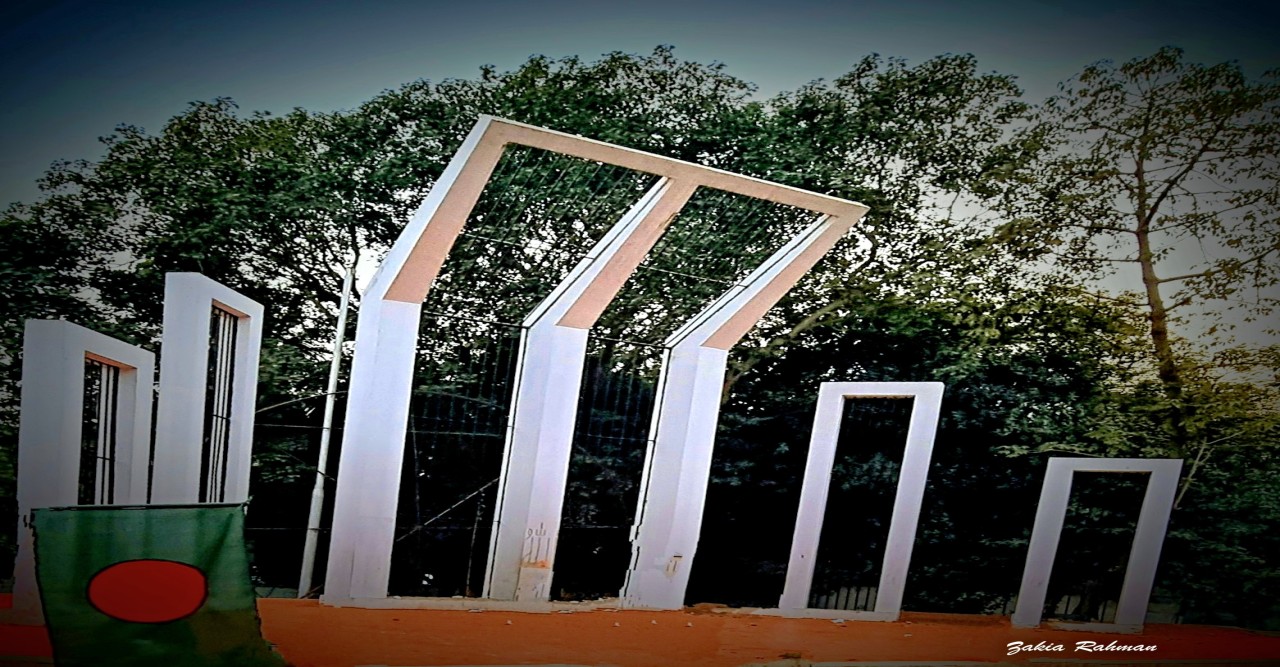
The conflict began after the partition in 1947, when the central government of Pakistan pushed for Urdu to be the only state language, overlooking that a significant portion of the population in East Pakistan spoke Bengali. On February 21, 1952, police killed several demonstrators in Dhaka, an act of violence that rallied the nation and ultimately led to Bengali being granted official status in 1956. On February 21, 1952, in defiance of Section 144, which prohibited public gatherings, students from Dhaka University and other institutions marched to advocate for language rights. Police fired upon the crowd, resulting in the deaths of protesters, including Abdus Salam, Abul Barkat, Rafiq Uddin Ahmed, and Abdul Jabbar. To commemorate the fallen, activists erected the Shaheed Minar monument on February 22, 1952.
Although the authorities demolished it shortly afterward, it was eventually rebuilt and stands today as a key symbol of Bengali cultural identity and resistance. The resolution finally came about as the persistent movement compelled the government to relent; Bengali was officially acknowledged as one of the state languages of Pakistan in the constitution of 1956.
Urdu and Urdu alone
During his visit to East Pakistan in March 1948, Muhammad Ali Jinnah stated that Urdu should be the sole state language of Pakistan. At meetings in Dhaka, he argued that a common lingua franca was essential for inter-provincial communication and unity. While he acknowledged that provinces could use their local languages for official purposes, he insisted that Urdu should be the state language to represent Islamic culture and Muslim tradition, as reported by the Dhaka Tribune. Key details of the declaration include Jinnah's statements made during his visit to Dhaka, specifically at Victoria Park (historically known as Bahadur Shah Park), a significant landmark in the Laxmibazar area of Old Dhaka, Bangladesh.
Jinnah framed Urdu as a unifying force, claiming it was the language "nurtured by a hundred million Muslims of this sub-continent" and essential for the nation's integrity. Although he is often quoted as saying "Urdu and Urdu alone," historians frequently cite this phrase as a misquote.
Nonetheless, Jinnah's intent to establish Urdu as the sole federal language was evident, but it faced significant opposition from the Bengali-speaking majority. This decision had a long-term impact on Pakistan's politics, as it contributed to the Bengali Language Movement. The language issue became a central point of political tension for East Pakistan, significantly influencing the regional unrest that eventually led to the 1971 Bangladesh Liberation War.
The 1998 Census lists the most widely spoken primary languages as Punjabi, Pushto, Sindhi, Saraiki, Urdu, and Balochi. Despite protests, the 1973 Constitution of Pakistan later affirmed Urdu as the national language, with English as the other official language.
Urdu proudly serves as the official language of Pakistan, symbolizing its national identity, while the 1952 Bengali Language Movement stands as a significant testament to the fight for linguistic rights and the preservation of Bangladesh's cultural heritage.
The Status of Urdu in British India
Urdu and Hindi are closely related languages that share a common vocabulary base primarily derived from Sanskrit and Prakrit. They also exhibit similar phonology, syntax, and grammar, allowing for mutual understanding in everyday conversation. Urdu emerged in the upper Ganga-Yamuna doab area, especially around Delhi, where Khari Boli was spoken. While Urdu has a grammatical foundation linked to Khari Boli, it is written in an adapted Perso-Arabic script and incorporates vocabulary from Persian and Arabic.
In 1837, Urdu was established as the official language of the British East India Company, supplanting Persian in northern India during the Company's governance. Earlier, the language was known by several names, including Hindvi, Hindi, Hindustani, and Rekhta.
The term "Urdu" was first introduced by the poet Ghulam Hamadani Mushafi around 1780. Although he referred to the language as "Hindavi" in his poems, "Urdu" is derived from the Turkic word "Ordu," which means "army."
In the late 18th century, it was called "Zaban-e-Urdu-e-Mualla," translating to "language of the exalted camp" or "language of soldiers." By the end of Aurangzeb's rule in the early 1700s, the common language in the vicinity of Delhi began to be recognized as "Zaban-e-Urdu." The phrase "Lashkari Zaban" also means "language of the army," as soldiers broadly used it.
It is important to note that Mughal Emperor Aurangzeb communicated in Hindvi, likely in a Persian-influenced form, as there is considerable evidence indicating that Hindvi was written in the Persian script during this era. At that time, European authors referred to speakers of Urdu as "Moors," a term that simply denoted "Muslim" (John Ovington, 1689).
The language now known as Urdu was called Hindi, Hindavi, Hindustani, Dehlavi, Dihlawi, Lahori, and Lashkari from the 13th century until the late 18th century. During the Delhi Sultanate, Persian was adopted as the official language in India, a policy that continued under the Mughal Empire, which dominated much of northern South Asia from the 16th to the 18th centuries. This era reinforced the Persian impact on Hindustani. In colonial India, British policies favoured Urdu to diminish the previously strong focus on Persian. Urdu obtained official recognition as it served as the language of the Muslim aristocracy, including Nawabs and Zamindars.
Urdu, Bengali, and other languages were used in West and East Pakistan
In 1867, Hindi-Urdu disputes highlighted the cultural and linguistic rift between Hindus and Muslims in British India. Urdu became a symbol of linguistic pride for Indian Muslims, which significantly influenced the political movement for Muslims, eventually leading to the establishment of the All-India Muslim League in 1906 and the later creation of Pakistan, a separate Muslim nation on the Indian subcontinent.
At the time Pakistan gained independence in 1947, only a small percentage of the population, estimated to be about 3% to 3.27%, spoke Urdu as their native language. The most commonly spoken first languages included Punjabi (approximately 37% of the population), Pashto (18%), Sindhi (14%), Saraiki (12%), and Balochi (3%). Urdu, while serving as the main lingua franca, was the mother tongue of roughly 9% of the population. As reported by Al Jazeera, in 1947, East Pakistan (now Bangladesh) accounted for the majority of Pakistan's population, with about 42 million Bengali and other aboriginal inhabitants.
Although there is no specific figure for Bengali speakers in the standard demographic records from 1947, the 1951 Census of Pakistan—the first official count after partition—indicated that most of this population was Bengali-speaking.
Determination of the official language of Pakistan
The decision to designate Urdu as the state language was not based on the majority ethnic group but rather on its potential acceptance in both regions of the country. People in West Pakistan recognized Urdu as their state language, whereas the 42 million more Bengali-speaking individuals in East Pakistan did not. Nevertheless, Muhammad Ali Jinnah, who founded Pakistan, decided that Urdu should be the official language, even though it was not the primary language of the majority in West Pakistan, while Bengali was the primary language of the majority in East Pakistan.
Muhammad Ali Jinnah sought to establish a single official language when Pakistan was formed as a Muslim nation, and the elite Muslims in India communicated in Urdu; ethnicity did not seem to factor into Jinnah's considerations. He may have believed that this approach would help mitigate potential uprisings by other ethnic groups in West Pakistan.
Pakistan boasts around 70 to 80 distinct languages. Although estimates can differ based on linguistic categorizations, the 2022 version of Ethnologue recognized 80 established languages, comprising 68 indigenous and 12 non-indigenous varieties. Urdu serves as the national language and is a crucial lingua franca for communication across the nation, while English has official status and is widely used in government, legal, and educational settings.
Jinnah’s goal was to create a single state language to unify both regions of Pakistan. However, he did not fully grasp that Bengali was the primary language of the East Pakistanis and that their involvement was essential. An alternative might have been to conduct polls or surveys and establish two official languages, Urdu and Bengali, similar to Canada’s bilingual framework with English and French.
Conversely, the emphasis on different ethnicities and their language privileges was prevalent in India.
Unrest and dissatisfaction
To avoid bloodshed in East Pakistan, it would have been prudent to formally recognize and preserve two official languages within the newly established nation, especially given that Bengali is the primary language of the majority of the population. Such recognition could have fostered greater unity and inclusivity among the country's diverse ethnic groups. However, Jinnah's decision to prioritize Urdu as the sole national language sparked widespread unrest and dissatisfaction among the Bengali-speaking population. This miscalculation not only created significant political discord but also laid the groundwork for long-term tensions between East and West Pakistan. By declaring the importance of upholding both Urdu and Bengali as official languages, Jinnah could have acknowledged the rich cultural heritage of the Bengali people, thereby promoting a sense of belonging and solidarity in a nascent nation marked by linguistic diversity.
Though this decision led to significant confusion. In contrast, India has embraced its diversity. Urdu continues to be recognized as an official language in several states with Urdu-speaking populations.
In India today, Urdu is recognized as an official language in various Indian states and union territories, where it is acknowledged alongside other local languages. It is classified as an official or additional official language in Bihar, Jharkhand, Telangana, Uttar Pradesh, West Bengal, and the Union Territories of Delhi and Jammu and Kashmir. Furthermore, Urdu is included in the Eighth Schedule of the Constitution of India, which affords it constitutional recognition as a significant Indian language. India recognizes 22 official languages under the Eighth Schedule of the Indian Constitution. Although these 22 languages are considered scheduled languages, Hindi and English function as the official languages for national communication and administration, with no individual language recognized as the predominant national language.
The language movement of 1952
The language movement of 1952 was a pivotal moment in the struggle for cultural and linguistic rights in Bangladesh, as it solidified our right to preserve and promote our mother tongue, Bengali. Despite the tragic consequences of this movement, including the loss of lives of brave individuals who stood up for their linguistic identity, the determination of these martyrs was instrumental in the fight to recognize Bengali as the official state language of East Pakistan. Their sacrifices serve as a profound reminder of the importance of linguistic heritage. In recognition of this struggle and the significance of language diversity, UNESCO declared February 21 as International Mother Language Day, honouring the fight to preserve cultural and linguistic diversity worldwide.
The writer is a freelance analyst.