The Politics of a “Golden Age”: Trump’s Address and America’s Deepening Divide - Akbar Haider Kiron
Akbar Haider Kiron প্রকাশিত: ২৩ জুলাই, ২০২৬, ০৮:৩৬ এএম

Akbar Haider Kiron
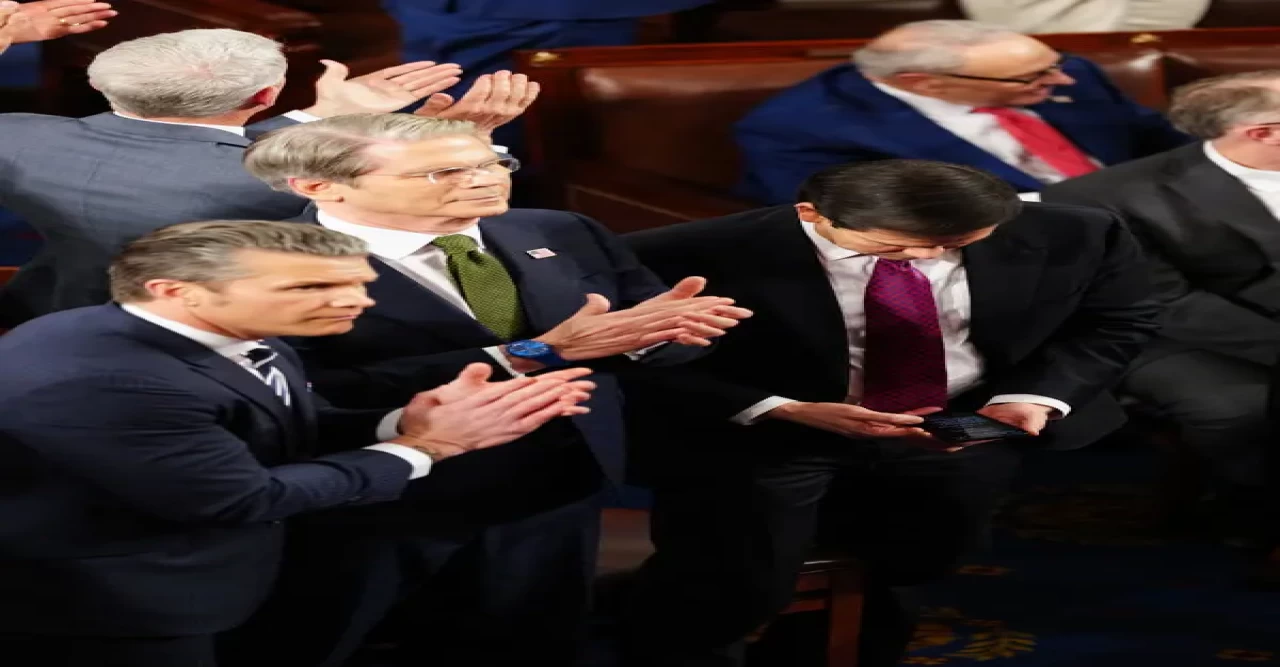
On February 24, President Donald Trump stood before Congress to deliver the first State of the Union address of his second term. Stretching nearly one hour and forty-eight minutes, the speech was notable not only for its length but for its ambition. Trump cast his administration’s record as the dawn of a new American “Golden Age,” projecting strength, recovery, and renewed national pride. But beyond the confident tone lay a more complex political landscape—one defined by polarization, economic unease, and competing narratives about the country’s direction.
Economic Confidence vs. Economic Experience The president highlighted moderating inflation, falling energy prices, and buoyant financial markets as evidence of robust growth. In macroeconomic terms, several indicators have indeed shown resilience. For Trump and his allies, these data points reinforce the claim that the United States has regained economic momentum. Yet economic confidence is not evenly distributed. Democratic leaders argue that aggregate statistics often obscure lived realities. For many households, housing costs, healthcare expenses, and everyday goods remain pressing concerns. Polling data continue to show a divided public, with skepticism lingering about whether economic gains have translated into tangible relief. This divergence—between top-line performance and ground-level perception—captures a broader debate shaping American politics: What constitutes economic success, and who ultimately benefits from it?
Immigration and the Language of Order
Immigration featured prominently in the address. Trump framed border enforcement as a matter of sovereignty and national security, asserting that government’s first duty is to protect its citizens. The rhetoric resonated with supporters who view immigration control as central to restoring institutional order. However, critics contend that such framing risks narrowing a multidimensional issue into a singular narrative of threat. Representatives Ilhan Omar and Rashida Tlaib were among those who voiced objections during the speech, reflecting deep ideological divides within Congress. Texas Representative Al Green was removed after a protest gesture—an episode that symbolized how debates over immigration now unfold as moral and cultural confrontations, not merely policy disagreements. The moment underscored a reality of contemporary American governance: unity is often invoked rhetorically, but rarely experienced institutionally.
Political Theater and Strategic Messaging More than seventy Democratic lawmakers reportedly boycotted the address, choosing instead to engage constituents through town halls and community events. This approach highlights a shift in modern political strategy: opposition is increasingly performed outside formal chambers, directly in conversation with voters. The speech itself functioned as both governance and campaign messaging. As midterm elections approach, each party is positioning its narrative—one centered on strength and resurgence, the other on accountability and inclusion.
The Meaning of Omission In major national addresses, what is omitted can be as consequential as what is proclaimed. While the president emphasized enforcement and economic revival, critics noted limited engagement with certain controversial policy outcomes and administrative disputes. Such omissions feed an ongoing debate over transparency and executive responsibility. In polarized environments, silence can quickly become part of the story.
A Nation at an Inflection Point To supporters, the address reaffirmed decisive leadership. To detractors, it reflected a continuation of combative political style in an already fractured civic culture. Whether the “Golden Age” framing endures will depend less on rhetorical flourish and more on public trust. Economic resilience, institutional stability, and civic cohesion remain fragile in a climate where partisan identity often supersedes shared national purpose. The ultimate verdict will not be rendered in the chamber of Congress, but in the judgment of voters—who must decide whether America stands at the threshold of renewal, or at a crossroads demanding recalibration.
Akbar Haider Kiron is a writer, journalist and VOA Correspondent